SMI-ICE-Chile’s Processing team will do more in-depth work to develop the water supply optimization tool to improve the resilience and sustainability of supply networks and hydrographic basins in Chile.
The project, “Strengthening water resilience in Chile: Water quality management in interconnected water supply networks”, was awarded a productive sector incorporation grant from the National Research and Development Agency (ANID), aimed at incorporating advanced human capital (individuals with doctoral degrees) into companies to facilitate innovation. For this grant, Dr. Nathalie Jamett will enter the productive sector.
The newly awarded project is led by Dr. Dennis Vega, and its ultimate objective is to develop a water supply optimization tool that integrates environmental and economic costs and water supply and demand with water quality, in order to improve the resilience and sustainability of supply networks and hydrographic basins in Chile.
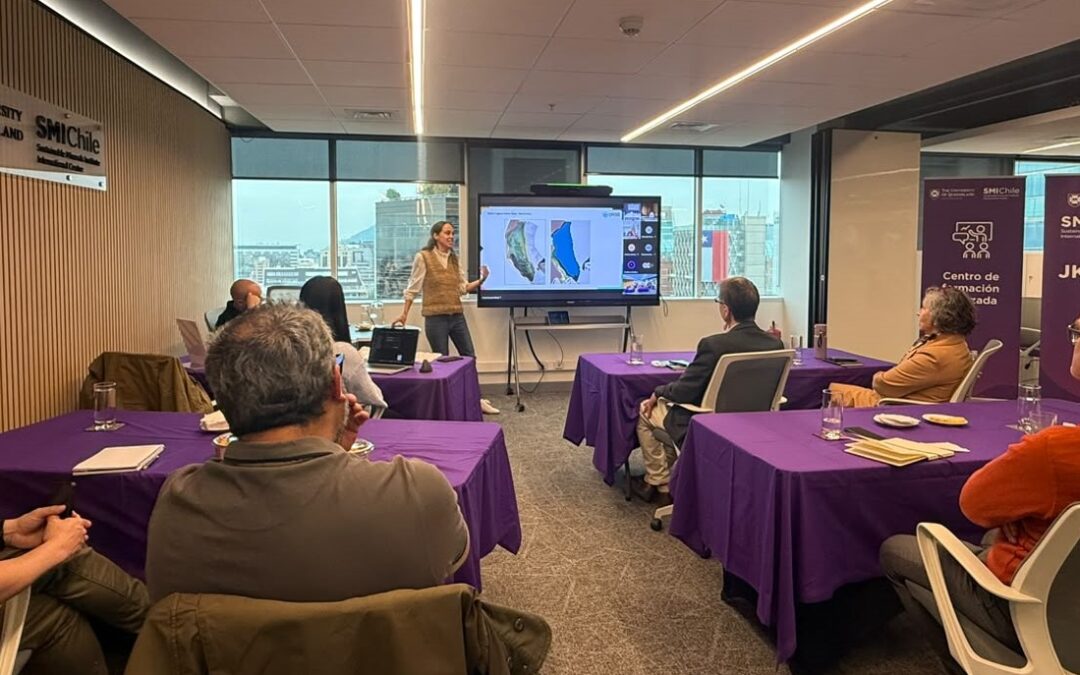
Many areas of the country face severe water stress because of the climate crisis and high user demand, both for consumption and production processes (especially mining and agriculture). Faced with this scenario, three years ago SMI-ICE-Chile developed a Planning tool for integrated water system, that considers restrictions such as environmental and economic costs and water availability to optimize networks.
This new proposal from SMI-ICE-Chile represents another step forward, as it seeks to improve the existing tool by developing and incorporating models that also consider water quality within the restrictions for optimization, based on the users’ specific requirements. “Our challenge is to optimize the distribution of water supplied to a basin’s users, depending on the source and the specific end user requirements, whether for human consumption or for production,” explains Dennis Vega.
“One of the motivations behind this project was feedback from workshops conducted with Mitsubishi Corporation,” explains Nathalie Jamett. “Since water sources—continental, underground, desalinated, or others—vary in composition and physicochemical properties, workshop participants asked if the tool considered these aspects in designing distribution networks. Now, this project addresses this concern, combining experimentation and modelling to strengthen its design and capabilities.”
SMI-ICE-Chile’s application for this productive sector incorporation grant obtained one of the highest scores.
“I am very proud of this outcome because it reflects the entire team’s effort and demonstrates the strength of our proposal,” commented Nathalie Jamett.