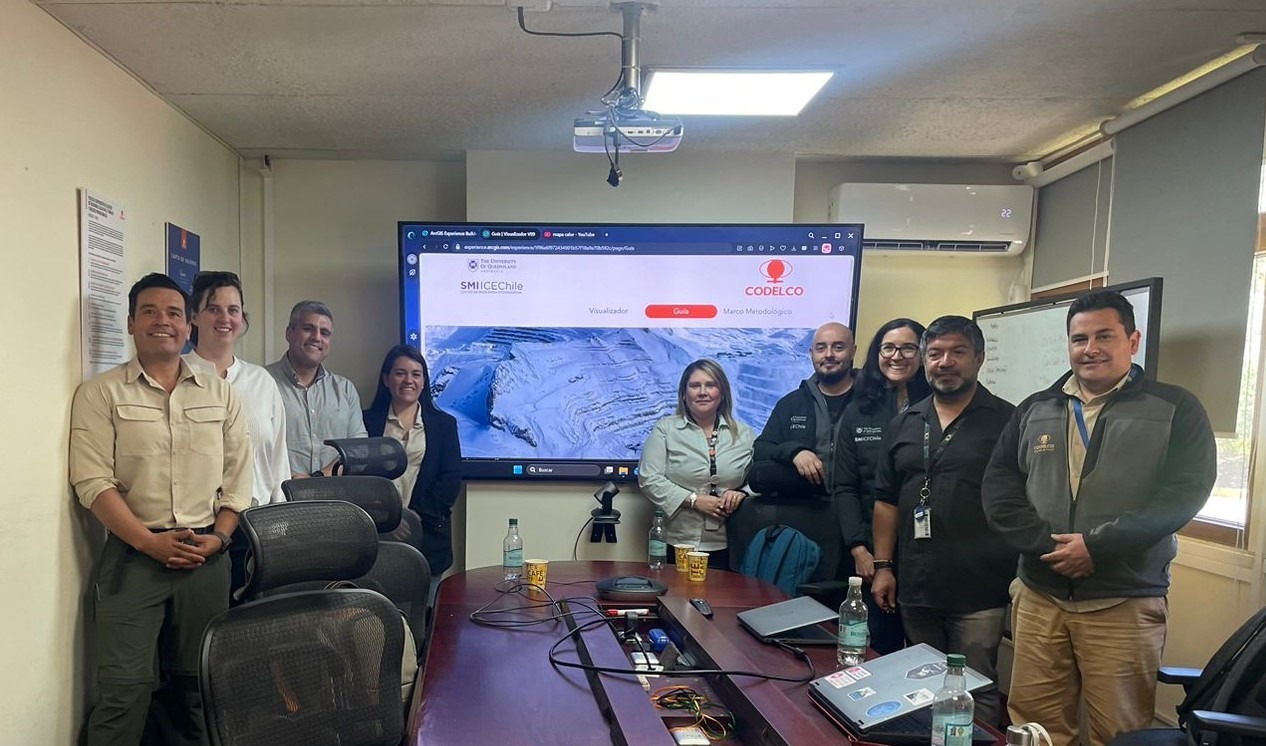
Within the framework of the climate change resilience project that SMI-ICE-Chile is developing for Codelco, the teams from both companies met to review the climate projections obtained for high-altitude regions and the progress of the geospatial results visualization tool.
Commissioned by Codelco’s Climate Change and Decarbonization Directorate, a team from our Center has been working for several months on a project that seeks to develop a methodological framework and a tool for managing physical climate risks to strengthen Codelco’s operational resilience.
The work of SMI-ICE-Chile aims to create a risk management framework and simulate future scenarios to identify, model, and analyze physical climate risks, thereby supporting the design of effective adaptation strategies.
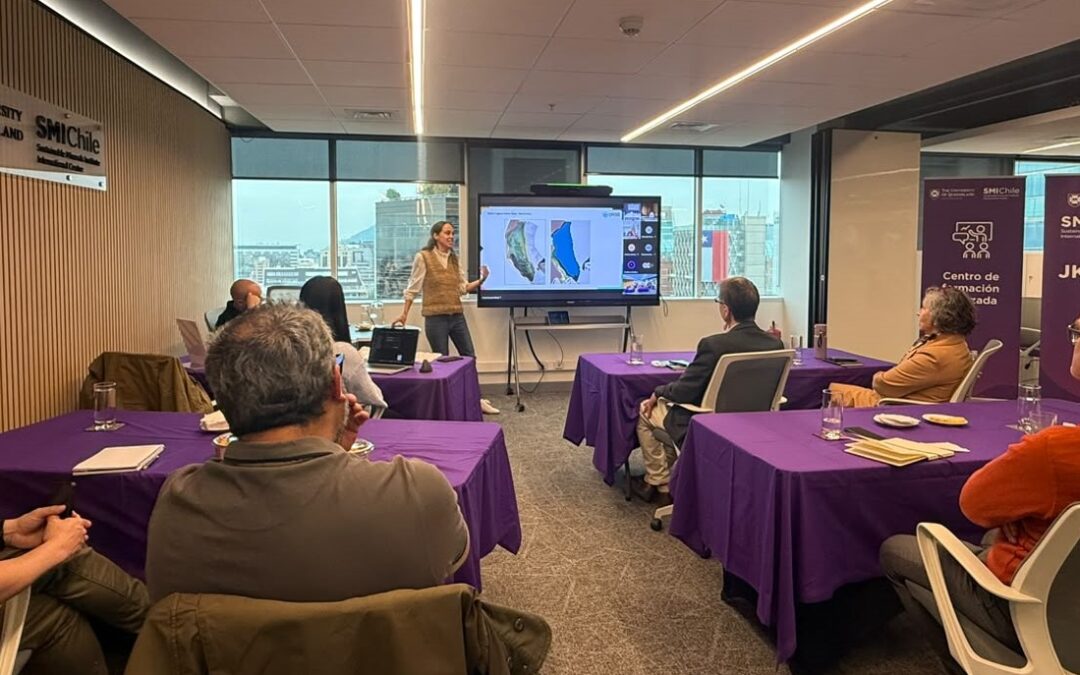
During two meetings held at the Codelco Andina offices in Saladillo and at the institutional building in Los Andes, the results of climate projections for different scenarios—from the most favorable to the most critical—were presented, with a time horizon up to the year 2100.


The SMI-ICE-Chile team, comprised of Herman Aguirre, Yendery Ramírez, Diego Ocampo, and Nevenka Bulovic (University of Queensland), also presented the progress made with the geospatial results visualizer, a platform developed by the SMI-ICE-Chile team that allows for the visualization of the physical risks of climate change, identifying the company’s assets and their potential impact on climate events.
Representing Codelco were Pablo Contreras, María José Ruiz-Esquide, María José Lagos, Ramiro Parra, Maximiliano Barros, Claudia Espinoza, Marta Sáez, Andrea Vidal, Esteban Cueto, Felipe Segovia, and Cristal González.