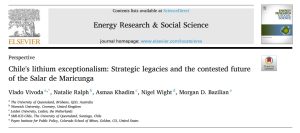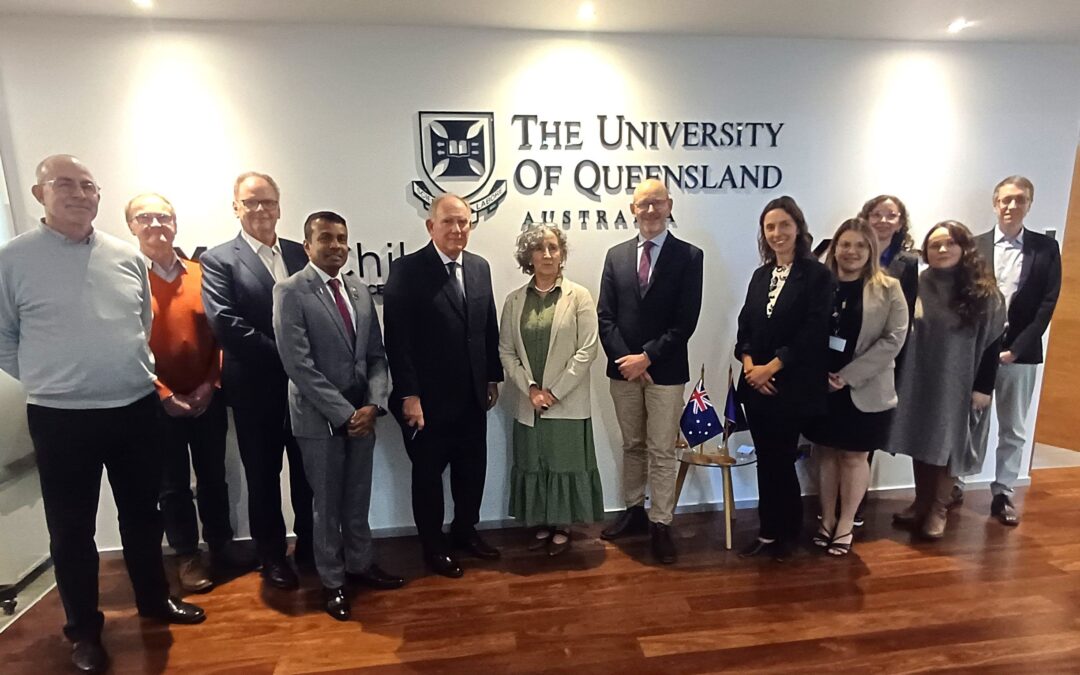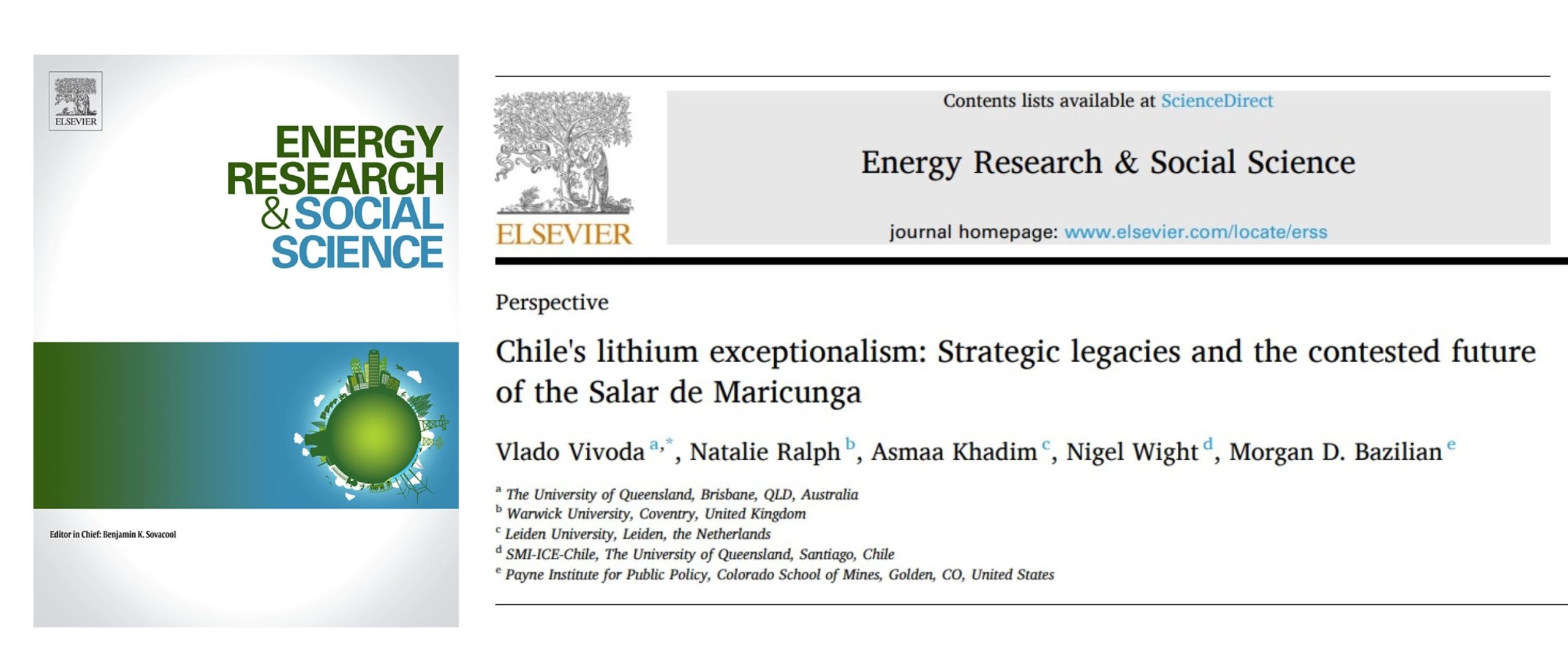
In the recent edition of the journal Energy Research & Social Science, the researcher from SMI-ICE-Chile presents, along with four other experts, an interesting work on Chile’s exceptional status regarding lithium, based on the analysis of the Maricunga Salt Flat.
The publication, titled “Chile’s Lithium Exceptionalism: Strategic Legacies and the Contested Future of the Salar de Maricunga”, is authored by Dr. Nigel Wight of SMI-ICE-Chile; Dr. Vlado Vivoda of the University of Queensland; researcher Nathalie Ralph of Warwick University (UK); Dr. Asmaa Khadim of Leiden University; and Morgan Bazilian, director of the Payne Institute and professor of Public Policy at the Colorado School of Mines (USA).
This publication argues that Chile, which possesses the world’s largest lithium reserves and is the second-largest producer, represents an exceptional case in the exploitation of this resource. The study describes a “uniquely Chilean configuration” shaped by historical legal constraints, renewed state ambition, and increasing global competition. Unlike the industrialized Salar de Atacama, Maricunga remains a frontier of potential, where state reclassification, consultation with Indigenous peoples, and environmental safeguards are being tested in real time.
The article explains that, unlike copper, where concessions and private capital predominate, lithium has been subject since the Cold War to an exceptional legal regime stemming from fears about its nuclear uses, combining regulatory restrictions, geopolitical alliances, and renewed state ambition. This hybrid model—neither fully statist nor neoliberal—distinguishes Chile from other producers like Australia and Argentina, where lithium is governed by ordinary mining concessions.
The researchers chose the Maricunga Salt Flat as a case study because its lower level of industrialization makes it a laboratory to observe whether Chile can avoid the socio-environmental damage seen in the Atacama Salt Flat. The National Lithium Strategy and CODELCO’s leadership in Maricunga mark a new phase in natural resource governance, although vulnerabilities persist, such as institutional fragmentation, limited oversight, and fragile trust between the state, Indigenous communities, and civil society.
One of the most critical challenges, according to the publication, is “social acceptance,” where agreements without substantive consent can erode legitimacy and generate resistance.
The study suggests that the legal status of lithium can be a strategic advantage if managed with foresight, incorporating ESG safeguards, water management, biodiversity protection, and circular economy principles. “The success of the Chilean lithium model will depend on relational politics, building institutional trust, and effective co-governance with Indigenous communities.”
Finally, two scenarios are projected: an optimistic one, in which Chile balances state control and private capital, strengthens Free, Prior and Informed Consent (FPIC), and consolidates ESG standards; and a pessimistic one, marked by litigation, delays, ecological degradation, and a loss of trust.
The evolution of the Maricunga project—with the participation of CODELCO and Rio Tinto—will determine whether Chile becomes a model or a cautionary tale in lithium governance. “This dual perspective makes Maricunga both a public policy experiment and an intellectual frontier for research on critical minerals.”
Download and review the full article at the following link